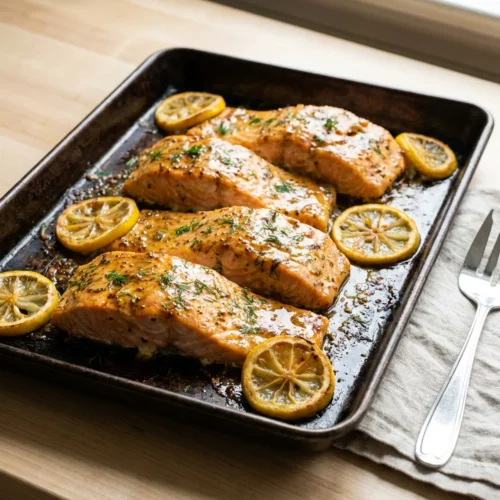
Baked Salmon with Dijon Glaze
Salmon fillets are coated in a sweet and savory mustard glaze and baked in a hot oven until flaky.
Ingredients
- 4 skin-on salmon fillets 6 ounces each, 170 grams
- 2 tablespoons olive oil 30 ml
- 1 teaspoon kosher salt 5 grams
- 1/2 teaspoon black pepper 1 gram
- 1/2 teaspoon garlic powder 1.5 grams
- 1 tablespoon Dijon mustard 15 grams
- 1 tablespoon honey 21 grams
- 1 tablespoon soy sauce 15 ml
- 1 medium lemon
- 2 tablespoons chopped fresh dill or parsley
Instructions
- Preheat the oven to 425°F (220°C). Line a rimmed baking sheet with parchment paper or aluminum foil.
- Cut the lemon in half. Squeeze the juice from one half into a small bowl. Slice the remaining half into thin rounds.
- Pat the salmon fillets dry with paper towels. Place them skin-side down on the prepared baking sheet.
- Drizzle the olive oil over the salmon. Sprinkle evenly with the kosher salt, black pepper, and garlic powder.
- Add the Dijon mustard, honey, and soy sauce to the bowl with the lemon juice. Whisk until smooth.
- Spoon the mustard mixture evenly over the top of each salmon fillet. Arrange the lemon slices on the pan around the fish.
- Bake for 12 to 15 minutes. The salmon is done when it flakes easily with a fork and reaches an internal temperature of 145°F (63°C).
- Remove the pan from the oven. Garnish with chopped fresh dill or parsley before serving.
Notes
Food safety: The USDA recommends cooking fish to an internal temperature of 145°F (63°C). Use a meat thermometer in the thickest part of the fillet to check for doneness.
If your fillets are thinner than one inch, check them at the 10-minute mark to prevent overcooking.
You can leave the skin on during baking. It helps insulate the bottom of the fish and separates easily from the meat once cooked.