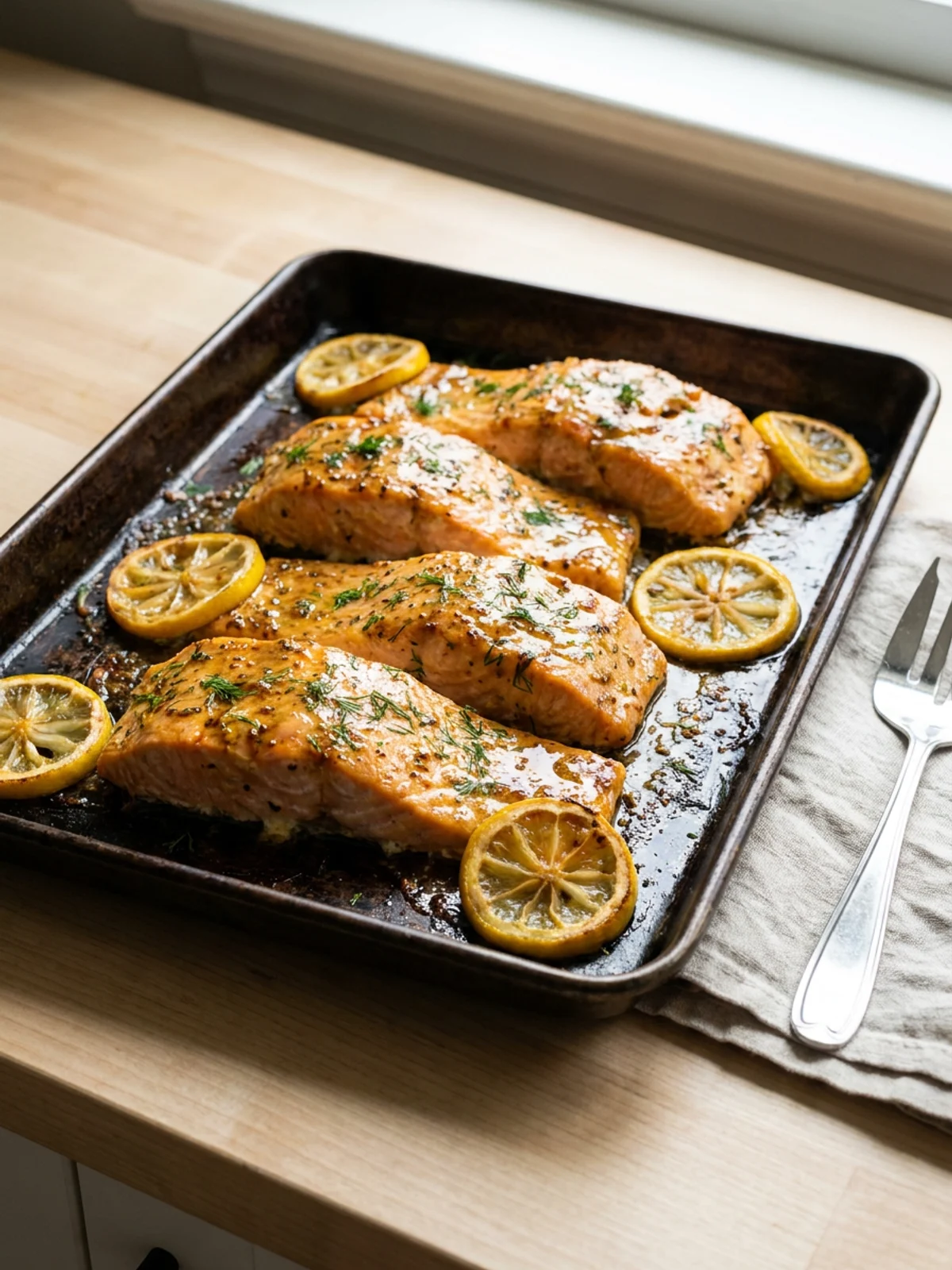
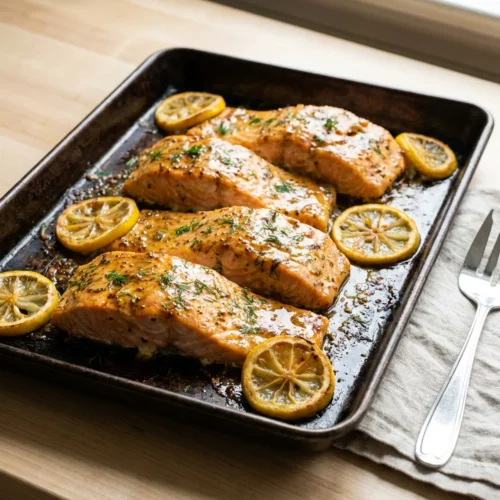
This baked salmon with dijon glaze comes together in under half an hour. The fish is seasoned with garlic powder, then topped with a quick mixture of mustard, honey, and soy sauce.
Jump to:
- Why will you love <strong>Baked Salmon with Dijon Glaze</strong>?
- <strong>Baked Salmon with Dijon Glaze Ingredients</strong>
- How to Make Baked Salmon with Dijon Glaze
- Step 1: Prepare the pan and fish
- Step 2: Mix the glaze
- Step 3: Coat and bake
- What to Serve with Baked Salmon with Dijon Glaze
- Helpful Tricks for Baked Salmon with Dijon Glaze
- How to Store and Freeze Baked Salmon with Dijon Glaze
- Baked Salmon with Dijon Glaze Recipe FAQs
- Can I use frozen salmon?
- What if I do not have honey?
- How do I know when the salmon is done without a thermometer?
Cooking salmon in a hot oven requires very little hands-on time. The high heat helps the glaze stick to the fish while the inside cooks through. It works well on busy weeknights when you want a warm meal without a lot of effort.
Why will you love Baked Salmon with Dijon Glaze?
High heat roasting at 425°F (220°C) cooks the fish quickly and helps the sugars in the honey caramelize slightly.
Patting the fillets dry before adding oil ensures the seasonings cling to the surface.
Slicing half of the lemon to bake alongside the fish releases aromatic oils into the pan.
Baked Salmon with Dijon Glaze Ingredients
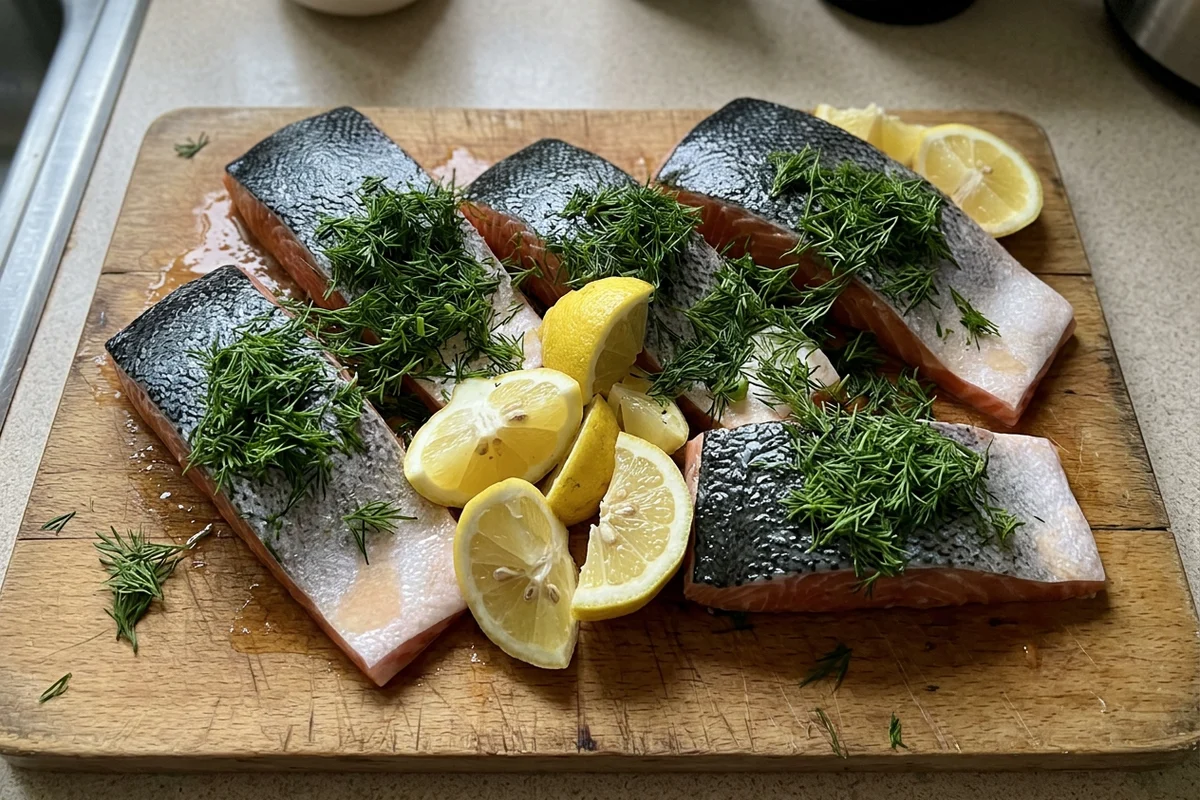
• Salmon fillets: Look for pieces that are roughly the same thickness so they finish cooking at the same time. Center-cut fillets usually work well.
• Dijon mustard: A smooth Dijon blends easily into the glaze. Grainy mustard also works but will give a different texture.
• Honey: Use a runny honey so it mixes evenly with the cold soy sauce and mustard.
• Soy sauce: Regular or low-sodium soy sauce is fine. You can substitute tamari if you prefer.
• Lemon: You will need one whole lemon to provide both fresh juice for the glaze and slices for the baking pan.
Exact quantities are in the recipe card below.
How to Make Baked Salmon with Dijon Glaze
Step 1: Prepare the pan and fish
Line a baking sheet to make cleanup easier. Dry the salmon fillets thoroughly with paper towels so the oil and spices adhere well.
Step 2: Mix the glaze
Whisk the mustard, honey, soy sauce, and fresh lemon juice together in a small bowl. The mixture should be smooth and thick enough to spoon over the fish.
Step 3: Coat and bake
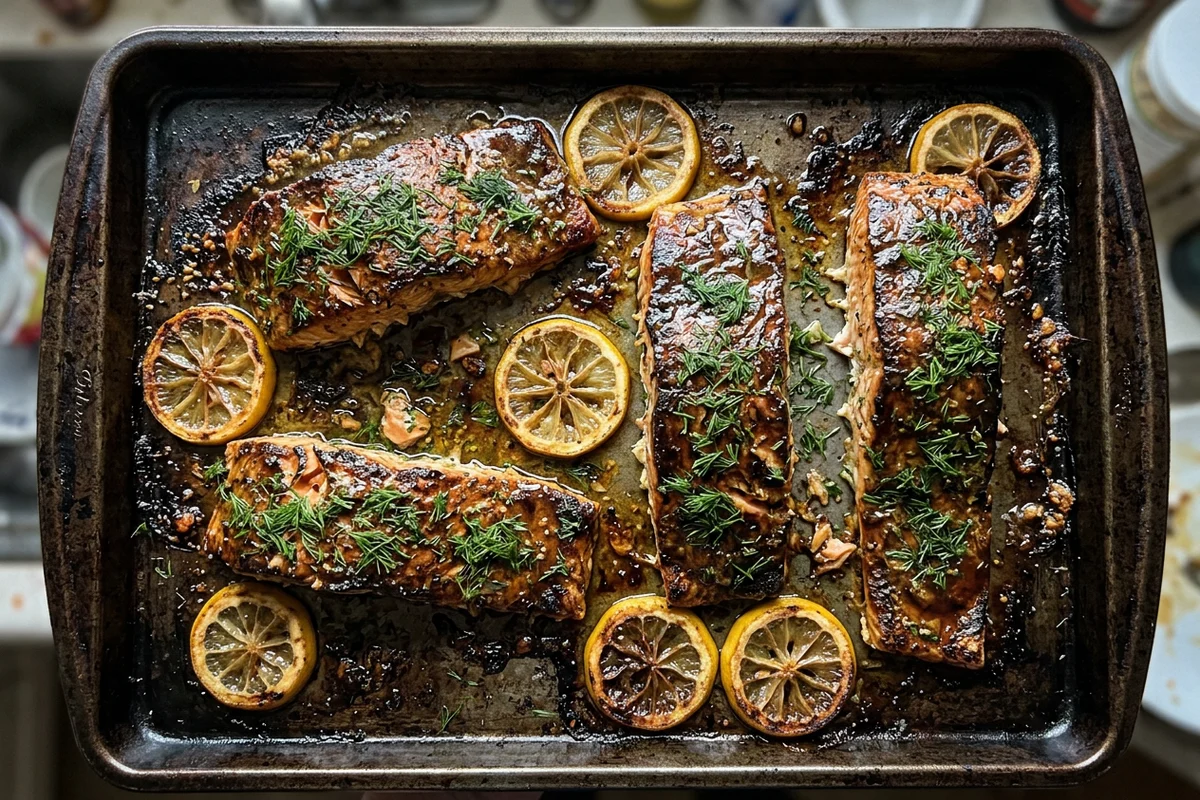
Arrange the salmon on the pan and cover each piece with the glaze. Place lemon slices around the fillets and bake until the fish reaches a safe internal temperature.
What to Serve with Baked Salmon with Dijon Glaze
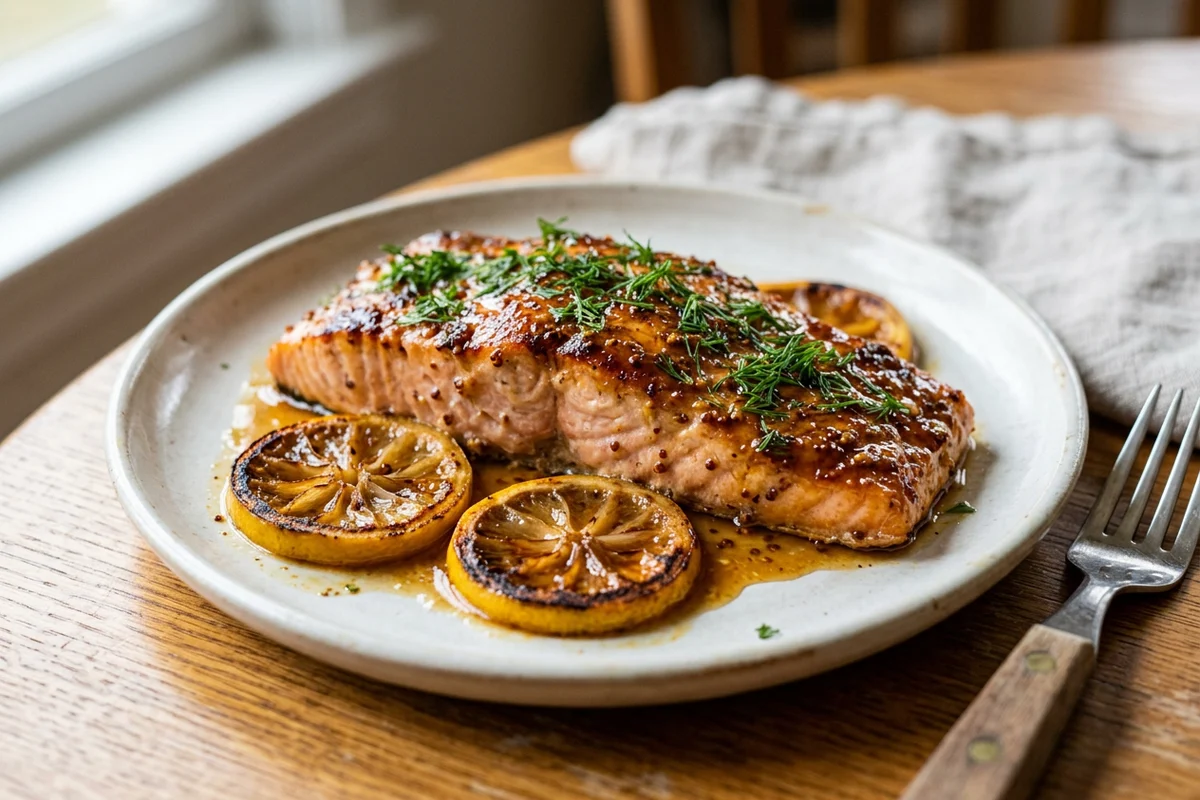
Serve this salmon with roasted green beans, steamed asparagus, or a side of fluffy white rice to soak up any extra glaze from the pan.
Helpful Tricks for Baked Salmon with Dijon Glaze
Food safety: The USDA recommends cooking fish to an internal temperature of 145°F (63°C). Use a meat thermometer in the thickest part of the fillet to check for doneness.
If your fillets are thinner than one inch, check them at the 10-minute mark to prevent overcooking.
You can leave the skin on during baking. It helps insulate the bottom of the fish and separates easily from the meat once cooked.
How to Store and Freeze Baked Salmon with Dijon Glaze
Store leftover salmon in an airtight container in the refrigerator for up to 3 days. Freezing cooked salmon can change its texture, so it is better eaten fresh. Reheat gently in the microwave at 50 percent power or in a 300°F (150°C) oven until warmed through.
Baked Salmon with Dijon Glaze Recipe FAQs
Can I use frozen salmon?
You can use frozen salmon, but you need to thaw it completely first. Leave it in the refrigerator overnight, then pat it very dry before seasoning.
What if I do not have honey?
Maple syrup is a good substitute for honey in this glaze. It provides the same sweetness and mixes well with the mustard and soy sauce.
How do I know when the salmon is done without a thermometer?
The fish will change from translucent to opaque pink. It should flake apart easily when you gently press the thickest part with a fork.
Baked Salmon with Dijon Glaze
Ingredients
- 4 skin-on salmon fillets 6 ounces each, 170 grams
- 2 tablespoons olive oil 30 ml
- 1 teaspoon kosher salt 5 grams
- 1/2 teaspoon black pepper 1 gram
- 1/2 teaspoon garlic powder 1.5 grams
- 1 tablespoon Dijon mustard 15 grams
- 1 tablespoon honey 21 grams
- 1 tablespoon soy sauce 15 ml
- 1 medium lemon
- 2 tablespoons chopped fresh dill or parsley
Instructions
- Preheat the oven to 425°F (220°C). Line a rimmed baking sheet with parchment paper or aluminum foil.
- Cut the lemon in half. Squeeze the juice from one half into a small bowl. Slice the remaining half into thin rounds.
- Pat the salmon fillets dry with paper towels. Place them skin-side down on the prepared baking sheet.
- Drizzle the olive oil over the salmon. Sprinkle evenly with the kosher salt, black pepper, and garlic powder.
- Add the Dijon mustard, honey, and soy sauce to the bowl with the lemon juice. Whisk until smooth.
- Spoon the mustard mixture evenly over the top of each salmon fillet. Arrange the lemon slices on the pan around the fish.
- Bake for 12 to 15 minutes. The salmon is done when it flakes easily with a fork and reaches an internal temperature of 145°F (63°C).
- Remove the pan from the oven. Garnish with chopped fresh dill or parsley before serving.