Making pizza dough from scratch is a rewarding process that results in a far superior crust than anything you can buy. This recipe uses a slow, cold fermentation in the refrigerator, which helps develop a deep, complex flavor in the dough.

Jump to:
- Why will you love <strong>Homemade Pizza Dough</strong>?
- <strong>Homemade Pizza Dough Ingredients</strong>
- How to Make Homemade Pizza Dough
- Step 1: Mix and Knead the Dough
- Step 2: Let the Dough Rise
- Step 3: Divide and Shape
- Step 4: Stretch and Bake
- What to Serve with Homemade Pizza Dough
- Helpful Tricks for Homemade Pizza Dough
- How to Store and Freeze Homemade Pizza Dough
- Homemade Pizza Dough Recipe FAQs
- Can I use all-purpose flour instead of bread flour?
- Why didn’t my dough rise much in the fridge?
- Can I make this recipe faster?
While the total time is over 24 hours, the hands-on work is minimal. Most of the time is spent letting the dough rest and develop flavor. The result is a crisp yet chewy crust that will be the star of your next pizza night.
Why will you love Homemade Pizza Dough?
Bread flour is key for its high protein content, which creates a strong gluten network. This gives the dough its characteristic chewiness and structure.
A long, cold rise in the refrigerator slows down the yeast activity. This allows enzymes to develop a richer, more complex flavor in the finished crust.
Hand-stretching the dough is a gentle process that preserves the air bubbles created during fermentation, resulting in a lighter, airier crust with a nice puffy edge.
Homemade Pizza Dough Ingredients
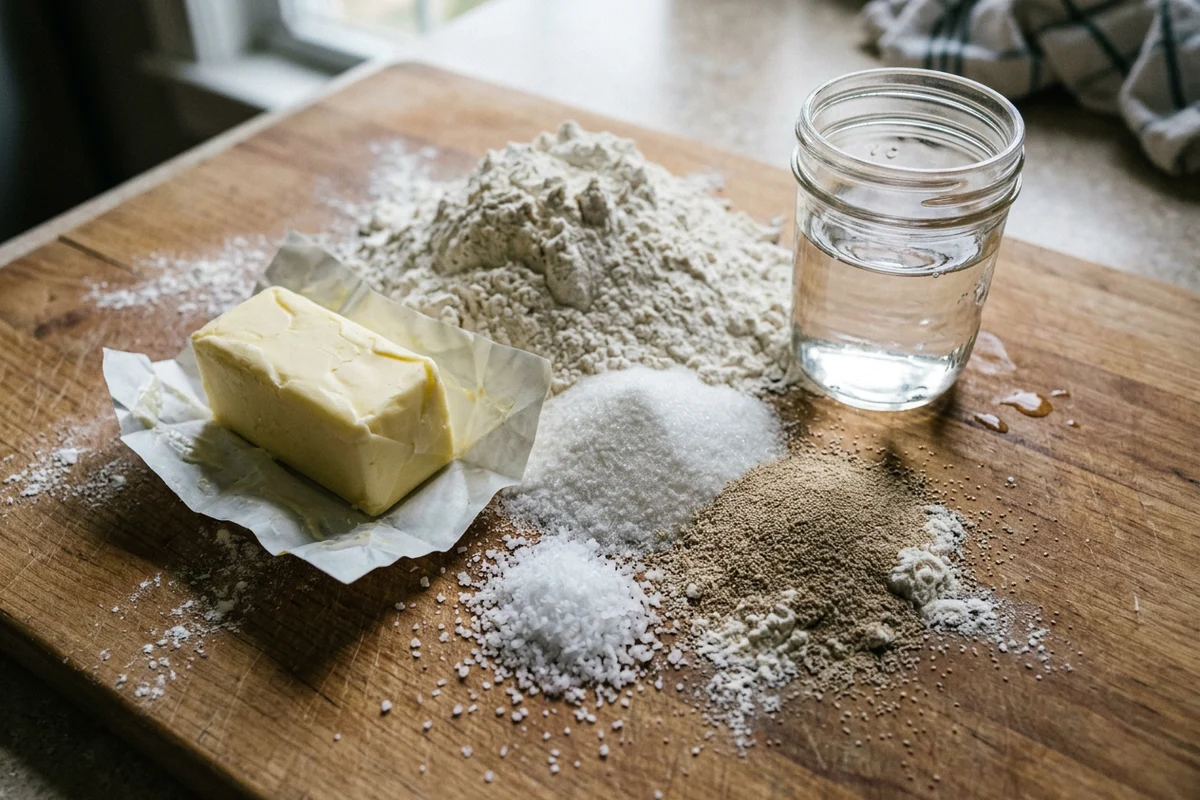
• Bread Flour: For the chewiest crust, stick with bread flour. If you must substitute, you can use all-purpose flour, but the final texture will be softer and less structured.
• Active Dry Yeast: This yeast needs to be activated in warm water. You can use an equal amount of instant yeast and add it directly to the dry ingredients without activating it first.
• Kosher Salt: Its coarse texture dissolves well and is free of additives. If using fine table salt, consider using about half the amount as it is much saltier by volume.
• Filtered Water: Using filtered water can improve the yeast’s performance, as chlorine in some tap water can inhibit its activity.
Exact quantities are in the recipe card below.
How to Make Homemade Pizza Dough
Step 1: Mix and Knead the Dough
Start by combining the flour, salt, sugar, and yeast in the bowl of a stand mixer. Add the lukewarm water and olive oil, then mix on low speed until a shaggy dough forms. Increase the speed and knead for about 5 minutes until the dough is smooth and elastic.
Step 2: Let the Dough Rise
Form the dough into a ball and place it in a lightly oiled bowl, turning it to coat. Cover the bowl and transfer it to the refrigerator. Let the dough rise slowly for at least 18 hours, and up to 24, to develop its flavor.
Step 3: Divide and Shape
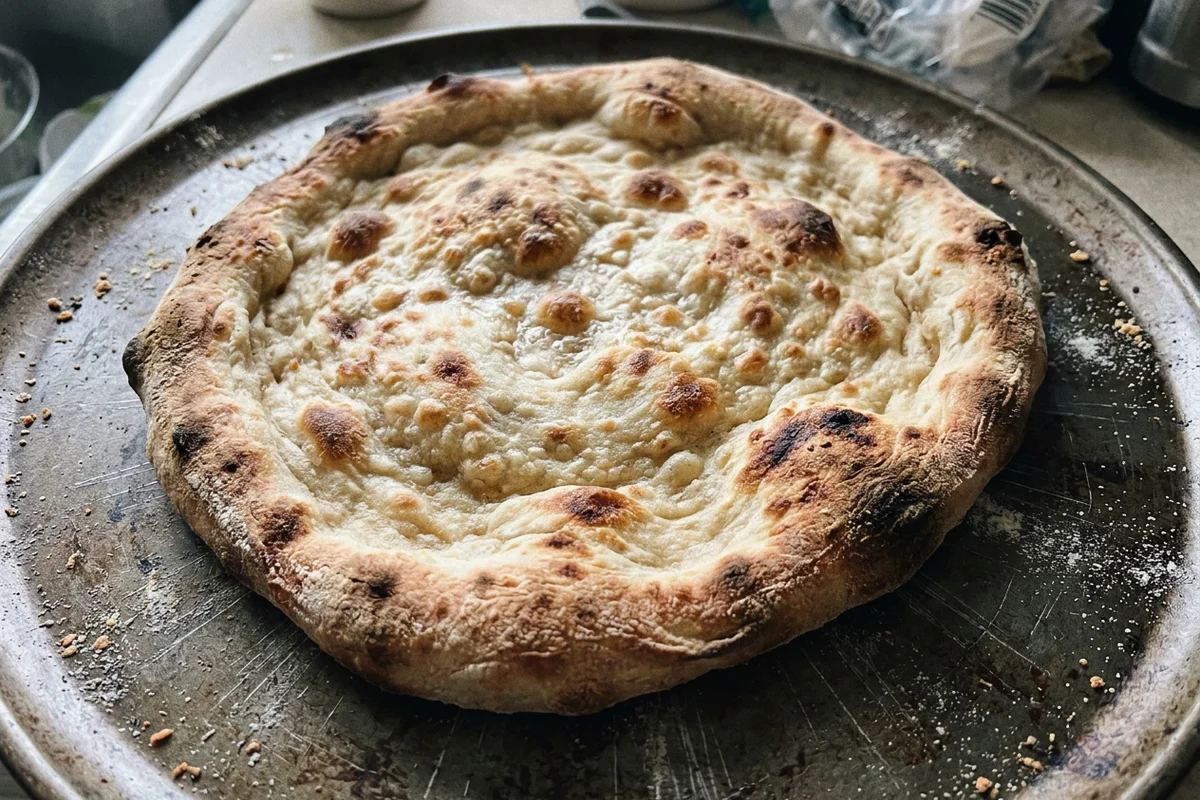
After the cold rise, place the dough on a floured surface and divide it into three equal pieces. Shape each piece into a tight ball by tucking the edges underneath. Cover the dough balls with a towel and let them rest at room temperature for 30 to 60 minutes.
Step 4: Stretch and Bake
Preheat your oven with a pizza stone inside to 500°F (260°C). Gently stretch one dough ball into a 12-inch round on a floured pizza peel. Top with your desired sauce and toppings, then slide it onto the hot stone to bake for 7 to 9 minutes.

What to Serve with Homemade Pizza Dough
Top with your favorite sauce and cheese, or try a classic Margherita with tomato sauce, fresh mozzarella, and basil leaves. A simple green salad on the side makes it a complete meal.
Helpful Tricks for Homemade Pizza Dough
For the best flavor, a long cold rise is recommended. If you’re short on time, you can let the dough rise in a warm place for 1.5 to 2 hours instead.
Lukewarm water (around 105–115°F or 40–46°C) is important for activating the yeast. Water that is too hot can harm the yeast.
This dough can be made without a stand mixer. Mix ingredients in a large bowl with a spoon, then knead on a floured surface for 8 to 10 minutes.
If any large bubbles form on the pizza while baking, you can carefully pierce them with a fork or knife.
How to Store and Freeze Homemade Pizza Dough
Store unbaked dough balls in airtight containers or bags in the refrigerator for up to 3 days. For longer storage, freeze for up to 3 months. Thaw frozen dough overnight in the refrigerator and let come to room temperature for about an hour before stretching.
Homemade Pizza Dough Recipe FAQs
Can I use all-purpose flour instead of bread flour?
Yes, but the crust will be softer and less chewy. Bread flour’s higher protein content is what creates the classic pizza crust texture.
Why didn’t my dough rise much in the fridge?
Cold fermentation is a very slow process. You won’t see a dramatic rise like you would at room temperature. The dough should look slightly puffier after 24 hours, but the main oven spring will happen in the hot oven.
Can I make this recipe faster?
For a quicker version, you can let the dough rise at room temperature for 1.5 to 2 hours instead of in the refrigerator. The flavor will be less developed, but you’ll still have a good homemade crust.

Homemade Pizza Dough
Ingredients
- 5 ½ cups bread flour plus more for shaping, 690g
- 4 teaspoons kosher salt 20g
- 1 tablespoon granulated sugar 15g
- 2 ¼ teaspoons active dry yeast (one 0.25-ounce packet) 9g
- 1 ¾ cups plus 3 tablespoons filtered water lukewarm, 455ml
- 1 tablespoon extra-virgin olive oil plus more for the bowl, 15ml
Instructions
- In the bowl of a stand mixer fitted with the dough hook, combine the bread flour, kosher salt, sugar, and active dry yeast.
- Add the lukewarm water and olive oil. Mix on low speed until a shaggy dough forms and pulls away from the sides of the bowl.
- Increase the mixer speed to medium and knead for 5 minutes, or until the dough is smooth and elastic.
- Transfer the dough to a lightly oiled large bowl and turn to coat. Cover with plastic wrap and refrigerate for 18 to 24 hours.
- Place the cold dough on a lightly floured countertop. Divide it into 3 equal portions and form each portion into a smooth, tight ball.
- Cover the dough balls with a clean kitchen towel and let them rest at room temperature for 30 to 60 minutes, until they are pliable.
- Place a pizza stone on a lower rack and preheat your oven to 500°F (260°C). Allow the stone to heat for at least 30 minutes.
- On a floured pizza peel, gently stretch one dough ball with your fingertips to a 12-inch circle, leaving a thicker outer edge.
- Add your sauce and toppings. Carefully slide the pizza onto the hot stone and bake for 7 to 9 minutes, until the crust is golden and the cheese is bubbly. Let rest for a minute before slicing.