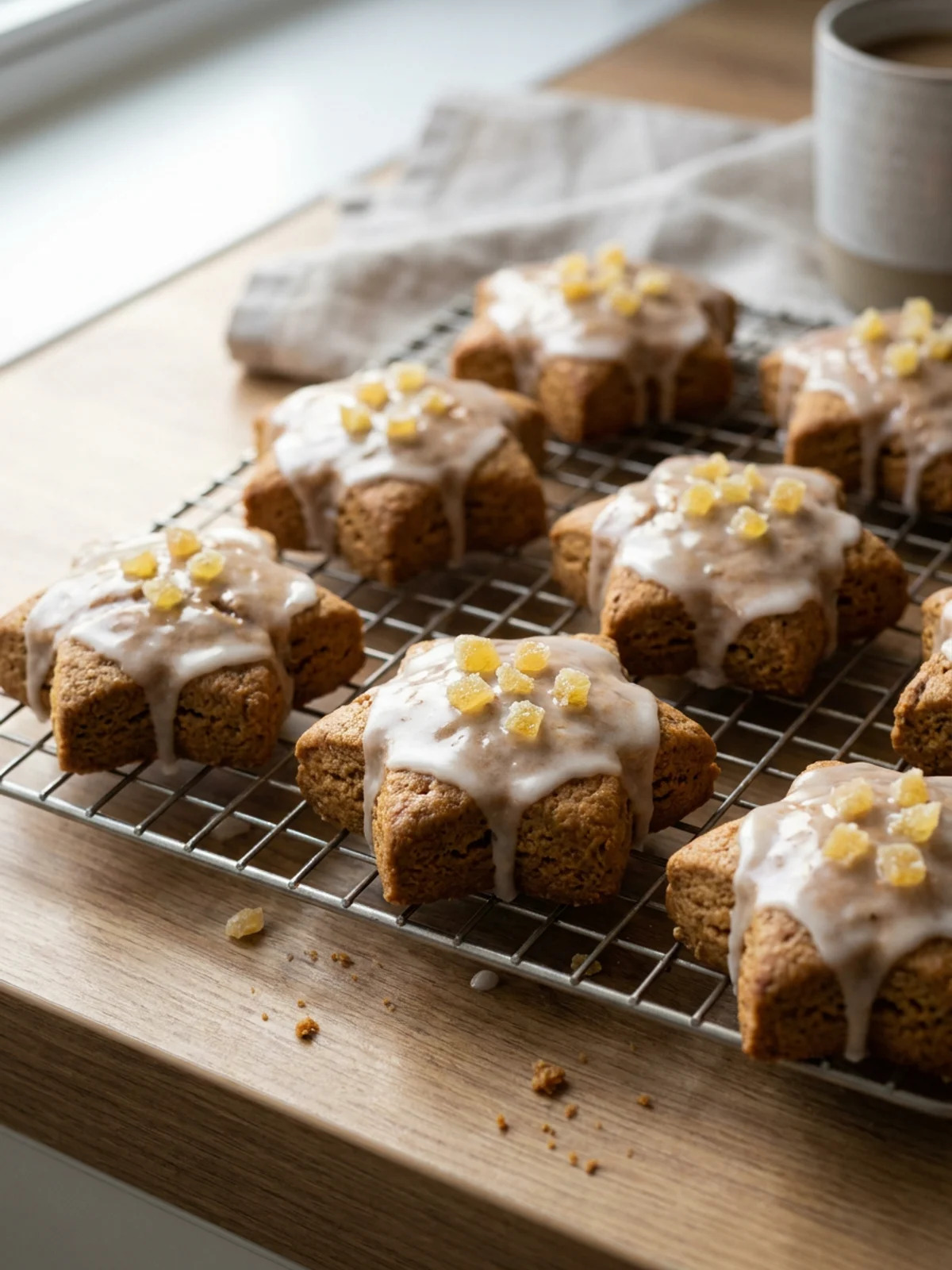
These baked treats combine the deep flavor of molasses with warm spices like ginger, cinnamon, and cloves. A classic buttermilk dough keeps the texture tender and flaky.
Jump to:
- Why will you love <strong>Gingerbread Scones</strong>?
- <strong>Gingerbread Scones Ingredients</strong>
- How to Make Gingerbread Scones
- Step 1: Mix the dry ingredients
- Step 2: Add the wet ingredients
- Step 3: Shape and cut
- Step 4: Bake and frost
- What to Serve with Gingerbread Scones
- Helpful Tricks for Gingerbread Scones
- How to Store and Freeze Gingerbread Scones
- Gingerbread Scones Recipe FAQs
- Can I use milk instead of buttermilk?
- Why did my scones spread in the oven?
- Can I freeze the unbaked dough?
You can prepare the dough and have these baking in the oven in about thirty minutes. A basic butter and powdered sugar frosting adds a sweet finish once they cool.
Why will you love Gingerbread Scones?
Cutting cold butter into the dry ingredients creates small pockets of fat for a flaky crumb.
Using buttermilk adds acidity that reacts with the baking powder for a better rise in the oven.
Chilling the dough briefly before baking prevents the butter from melting too fast.
Gingerbread Scones Ingredients
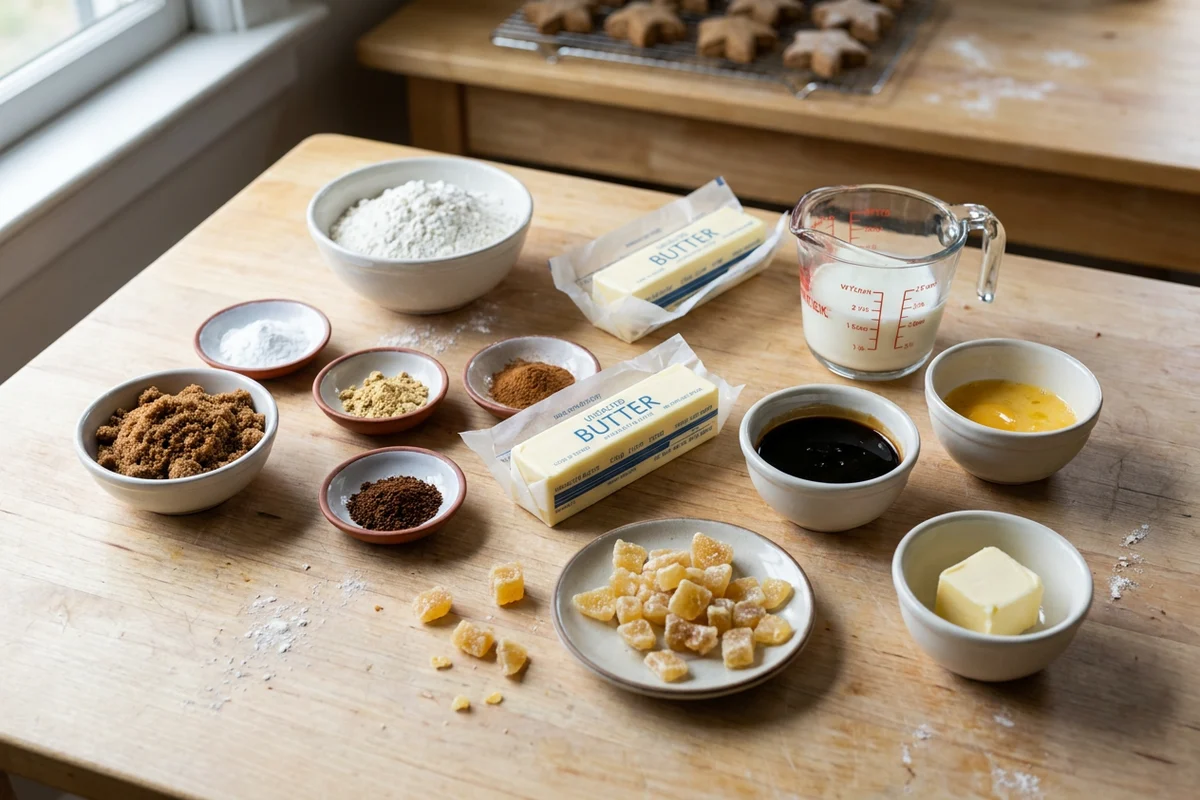
• All-purpose flour: Spoon the flour into your measuring cup and level it off so the dough does not become too dry.
• Dark brown sugar: Packed brown sugar adds extra moisture and a deeper caramel flavor than light brown sugar.
• Unsulfured molasses: Choose regular baking molasses rather than blackstrap, which can be too bitter.
• Unsalted butter: Keep the butter very cold in the refrigerator until you are ready to cut it into the flour.
• Buttermilk: Cold buttermilk binds the dough together and gives it a slight tang.
• Candied ginger: Dice this finely so it sticks to the top of the scones before baking.
Exact quantities are in the recipe card below.
How to Make Gingerbread Scones
Step 1: Mix the dry ingredients
Whisk the flour, sugar, baking powder, salt, and spices together in a large bowl. Cut the cold butter into the flour mixture until it looks like coarse crumbs.
Step 2: Add the wet ingredients
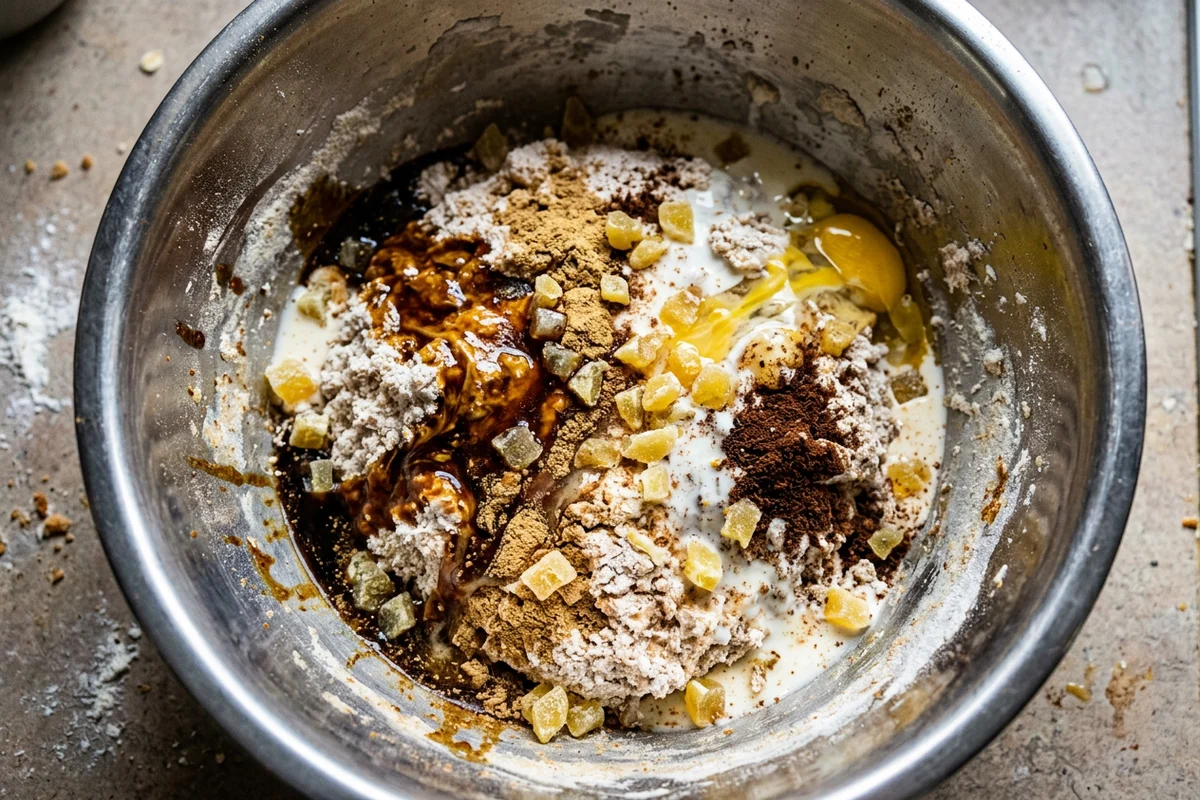
Whisk the buttermilk and molasses in a separate bowl. Stir this liquid into the flour mixture until a sticky dough forms.
Step 3: Shape and cut
Pat the dough out on a floured surface until it is half an inch thick. Cut into small shapes and place them on a parchment-lined baking sheet.
Step 4: Bake and frost
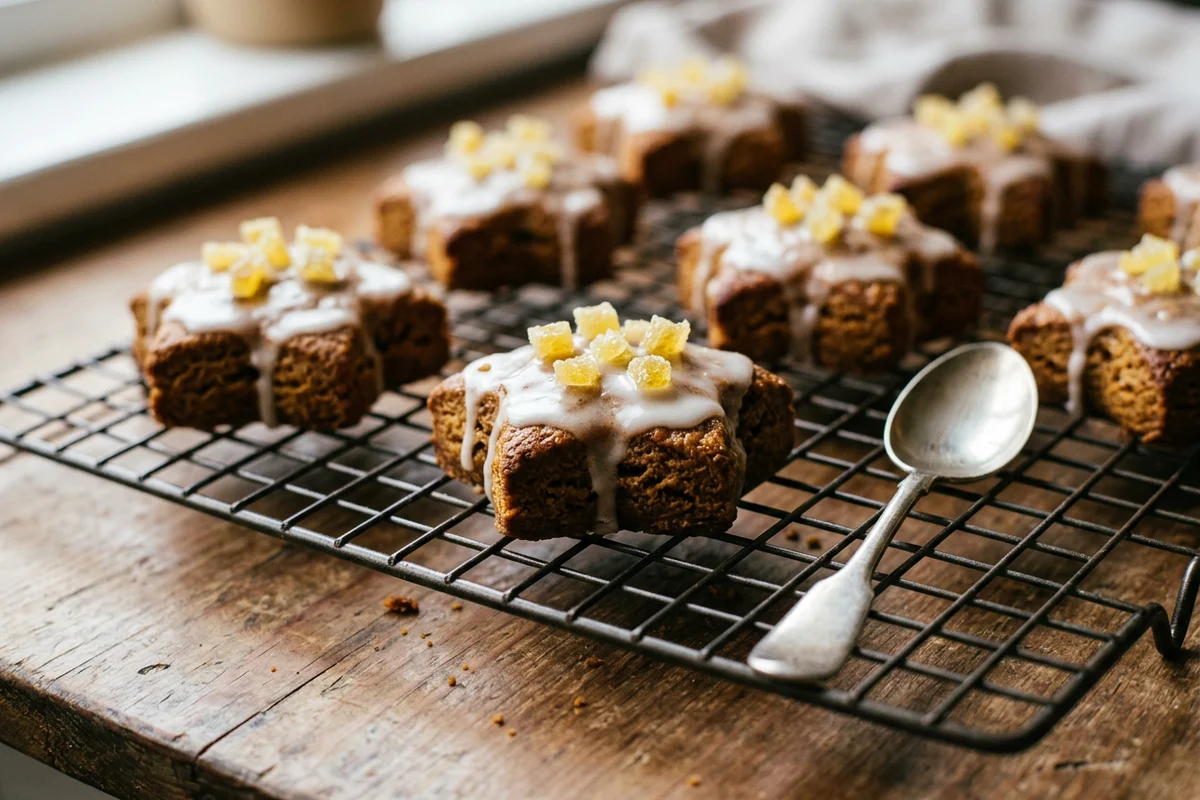
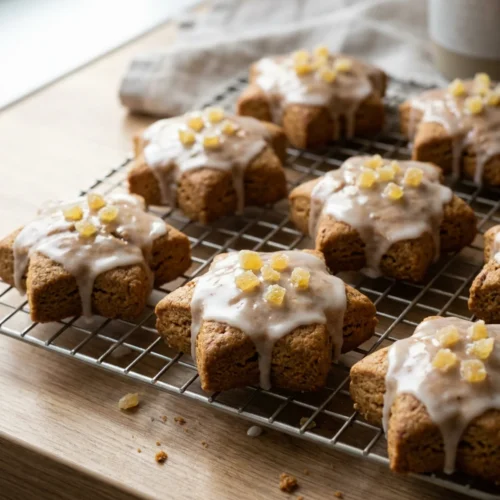
Brush the dough with egg wash, sprinkle with candied ginger, and bake until golden. Once the scones are cool, mix the frosting ingredients and pipe the glaze over the top.
What to Serve with Gingerbread Scones
Serve these warm with a cup of hot coffee or black tea.
Helpful Tricks for Gingerbread Scones
If the dough gets too warm while cutting, place the baking sheet in the refrigerator for 10 minutes before baking.
You can use a knife to cut the dough into small triangles if you do not have a small cookie cutter.
Food safety: Ensure the scones reach an internal temperature of 160°F (71°C) to safely cook the egg wash.
How to Store and Freeze Gingerbread Scones
Store leftover frosted scones in an airtight container at room temperature for up to two days, or in the refrigerator for up to five days. Freeze unfrosted baked scones for up to three months. Reheat unfrosted scones in a 300°F (150°C) oven for five minutes.
Gingerbread Scones Recipe FAQs
Can I use milk instead of buttermilk?
Buttermilk provides the acidity needed for the baking powder to work well. You can make a substitute by adding a splash of lemon juice or white vinegar to regular milk and letting it sit for five minutes.
Why did my scones spread in the oven?
The butter likely got too warm before baking. Keep your ingredients as cold as possible and chill the shaped dough for ten minutes if your kitchen is warm.
Can I freeze the unbaked dough?
Yes. Freeze the cut out scones on a baking sheet, then transfer them to a freezer bag. Bake them straight from frozen, adding a few extra minutes to the baking time.
Gingerbread Scones
Ingredients
- 2 cups all-purpose flour 240g
- 1 tablespoon baking powder 15g
- 1/2 teaspoon salt 3g
- 1/2 cup dark brown sugar firmly packed, 100g
- 1 1/2 teaspoons ground ginger 3g
- 1 teaspoon ground cinnamon 2g
- 1/8 teaspoon ground cloves
- 1/2 cup cold unsalted butter cut into cubes, 113g
- 1/3 cup cold buttermilk 80ml
- 1/3 cup unsulfured molasses 113g
- 1 large egg lightly beaten
- 4 pieces candied ginger finely diced, 20g
- 2 tablespoons unsalted butter softened, 28g
- 1 cup powdered sugar 120g
- 1 tablespoon heavy cream 15ml
Instructions
- Preheat your oven to 400°F (200°C). Line a large baking sheet with parchment paper.
- In a large bowl, whisk together the flour, baking powder, salt, dark brown sugar, ground ginger, cinnamon, and cloves.
- Cut the cold cubed butter into the flour mixture using a pastry blender or two forks until the mixture resembles coarse meal.
- In a small bowl, whisk the buttermilk and molasses. Pour this into the flour mixture and stir gently until just combined. The dough will feel sticky.
- Turn the dough out onto a lightly floured surface. Pat it gently into a 1/2-inch (1.25 cm) thick rectangle.
- Cut the dough into 30 small shapes using a small cookie cutter. Gather any scraps, gently press them together, and cut out the remaining dough.
- Place the scones on the prepared baking sheet. Brush the tops lightly with the beaten egg and sprinkle with the diced candied ginger.
- Bake for 14 to 15 minutes until golden brown. Baked goods with an egg wash should reach a safe internal temperature of 160°F (71°C).
- Transfer the scones to a wire rack to cool completely. In a small bowl, beat the softened butter, powdered sugar, and heavy cream until smooth, then pipe or drizzle over the cooled scones.